
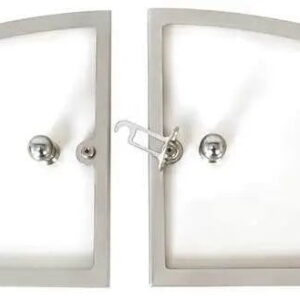
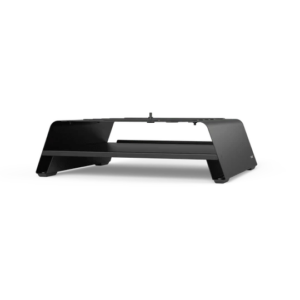
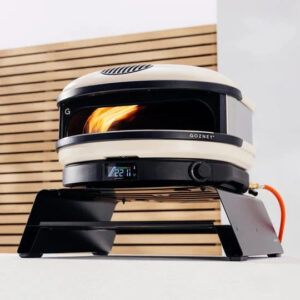
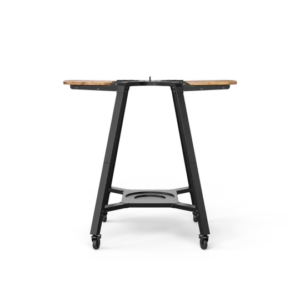
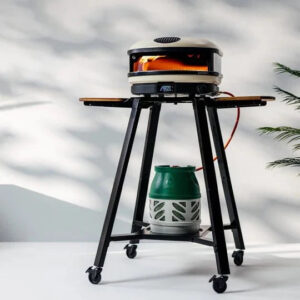
Gozney Arc Stand
Upgrade your Gozney Arc or Arc XL with the Arc Stand, designed for easy assembly, long-lasting durability and effortless portability. Whether you're creating the ultimate outdoor kitchen or need a versatile, freestanding setup, this stand provides the perfect cooking height while maintaining everything

Outdoor grill accessories: The right equipment for perfect results
Good accessories turn a solid grill into a real outdoor kitchen. Here you will find out which helpers really make a difference, what to pay attention to when buying and how to keep your equipment in top shape for a long time.
Why the right accessories make the difference
You've invested in a high-quality grill, maybe even a smoker or a pizza oven - and the steak still doesn't turn out the way you imagined? In most cases it is not the device, but the tools and helpers around it. A precise thermometer, good tongs, the right grate: these things determine whether your grilled food turns out perfectly or whether you work blindly. Accessories are not a nice extra, but rather the lever that you can use to noticeably improve your results.
Think of it this way: A professional chef would never prepare an expensive piece of meat without measuring the core temperature. It's the same with grilling. If you have control over temperature, heat distribution and timing, you will achieve consistently good results - regardless of whether it is windy, whether the sun is shining or whether you are cooking for two or twenty people. That's exactly what this guide is about: We'll go through each important accessory category, explain what they're good for, what you should pay attention to when buying and how to care for them.
If you are still looking for your own grill or want to upgrade it, you will find suitable devices in our categories Grills & Smokers and Outdoor grills. This guide focuses on everything that comes after – the accessories that turn grilling into a craft.
In short: First invest in a good thermometer, solid barbecue cutlery and a suitable cover. These three things bring you the most added value in your everyday life and at the same time protect your investment in the grill itself.
Barbecue cutlery: tongs, spatulas and forks
The barbecue cutlery is your extended arm over the embers. It separates you from the heat and determines how confidently you move the grilled food. Many people underestimate this category and resort to thin hardware store cutlery that bends after one season or whose handles melt. Good cutlery is one of the most worthwhile purchases of all because you have it in your hand every single barbecue evening.
The grill tongs – your most important tool
Pliers are the tool you use most often. You can use it to twist sausages, flip steaks, put vegetables on top and take grilled food off the grill. A good pair of pliers fits firmly in the hand, grips securely and springs back cleanly. Look for a length between 40 and 45 centimeters - long enough to protect your hand from the heat, but short enough to work precisely. The front end should be serrated or wavy so that even smooth grilled food does not slip away.
High-quality pliers are made of stainless steel, ideally with a locking mechanism that keeps them compact for storage. Cheap models often have a spring resistance that is too hard, which causes fatigue in the hand over time, or a mechanism that gets stuck. Before buying, hold the pliers in your hand several times and open them - you will notice a good model straight away.
Grill spatula and spatula
For burger patties, fish, and anything that might fall apart, you'll need a wide, flat spatula. What is crucial is a thin, bevelled front edge that slides neatly under the food to be grilled without tearing it. Wide models are particularly suitable for fish and large patties. Some turners have an integrated notch for cutting or a bottle opener in the handle - nice extras, but not a must.
Meat fork – use carefully
The classic grill fork polarizes. Many grill professionals advise against piercing meat because juice will come out. A sturdy fork is definitely practical for lifting large roasts or carving. Use them more for holding and positioning than for piercing steaks.
What you should pay attention to when buying
- Material: Stainless steel (rust-free, easy to clean) for the metal parts, heat-resistant plastic or wood for the handles.
- Length: 40-45cm is a good compromise between heat protection and precision.
- Processing: No sharp edges, clean welds, tight-fitting handles.
- Hanging loop: Practical for space-saving storage on the grill or on a hook rack.
- Dishwasher suitability: Pure stainless steel parts are allowed in the machine, cutlery with wooden handles is better not.
Care tips
Clean the cutlery immediately after grilling, as long as the fat and marinade have not yet burned on. Stainless steel tolerates warm water and detergent without any problems. Rub wooden handles occasionally with a little food-safe oil to prevent the wood from drying out and becoming cracked. Store the cutlery in a dry place - constant moisture attacks even stainless steel's joints.
Grill thermometer: puncture, radio and app
If you only buy one accessory, it's a good thermometer. Nothing improves your results as reliably as controlling core temperature. Whether the steak is medium rare, whether the chicken is done or whether the pulled pork falls apart tenderly – all of this depends on a few degrees Celsius. You can't judge this with certainty by eye or by pressing your thumb, but you can with a thermometer.
Penetration thermometer
The classic puncture thermometer is quick, inexpensive and completely sufficient for most everyday situations. You briefly poke the thickest part of the food, read it and pull it out again. Good digital models display the temperature in two to three seconds and are accurate to around one degree. Make sure the measuring tip is thin and doesn't leave a large hole, and the display is easy to read.
Wireless and dual thermometer
For longer cooking processes such as roasting, pulled pork or brisket, it is worth using a thermometer with a fixed probe that remains in the meat throughout the entire cooking time. Radio models transmit the values to a receiver that you can take into the house. This way you don't have to run to the grill every few minutes. Many devices offer two sensors: one for the core temperature, one for the cooking chamber temperature. This is worth its weight in gold when smoking because you can keep an eye on both values at the same time.
App-controlled Bluetooth and WiFi thermometers
The modern version is wireless thermometers that send their data to your smartphone via Bluetooth or WLAN. You see temperature progressions as a curve, receive push notifications when the target temperature is reached and can sometimes even estimate the remaining cooking time. These devices are a real relief for ambitious grillers who like to sit in the garden and enjoy the evening while the meat cooks. Pay attention to the range of Bluetooth models - the signal can break off through walls and over longer distances. WLAN models solve this, but require stable network coverage in the garden.
What you should pay attention to when buying
- Measuring accuracy: The more precise, the better – especially when it comes to delicate grilled foods such as poultry.
- Response time: With puncture thermometers, every second that the lid remains open counts.
- Temperature range: For pizza ovens and very hot grills, you need sensors that can withstand high temperatures.
- Heat resistance of the sensors: Permanently installed sensors must be able to withstand the heat of the cooking space permanently.
- Battery or battery: Check the running time and charging comfort, especially for app models.
Care tips
Never completely submerge electronic thermometers in water unless they are specifically waterproof. Wipe the measuring tip with a damp cloth after each use. You clean wired sensors carefully without pulling on the cable, as this is where the most sensitive area is. Store thermometers dry and at moderate temperatures, not long-term in a hot grill.
| Thermometer type | Ideal for | Advantage | To be noted |
|---|---|---|---|
| puncture | Steaks, sausages, quick grilling | Fast, cheap, flexible | Lid must be on for measuring |
| Radio with sensor | Roasting, smoking, long cooking times | Continuous monitoring from a distance | Range limited |
| App (Bluetooth/WiFi) | Low & Slow, comfort grilling | Curves, alarms, history on the cell phone | Network coverage required |
Pizza stones and baking accessories
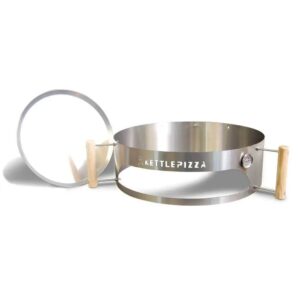
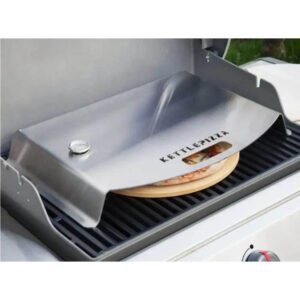
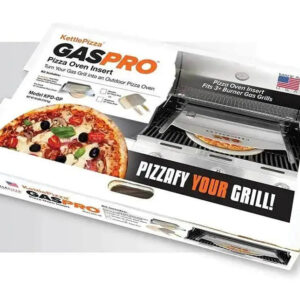
A pizza stone turns your kettle or gas grill into a small stone oven. The stone stores heat and releases it evenly to the base - so the pizza gets crispy on the bottom without burning on the top. The same principle also works for tarte flambée, bread and rolls. If you're serious about pizza, take a look at our dedicated ones Pizza ovens that reach even higher temperatures.
Pizza stone, pizza steel or cordierite
Classic pizza stones are made of fireclay or cordierite. Cordierite is particularly resistant to temperature changes and does not tear easily. An alternative is pizza steel: It conducts heat faster and more powerfully, so that the base browns in less time. Steel is more robust and virtually unbreakable, but heavier and more expensive. To get started, a good cordierite stone is an excellent choice.
The right accessories for the stone
There's more to baking accessories than just the stone. A pizza peel - ideally made of wood for insertion and thin aluminum for turning and removing - is practically indispensable. With a wooden pusher, the dough doesn't stick so easily; the aluminum pusher slides thinly under the finished pizza. A pizza cutter or a chopping knife completes the equipment.
What you should pay attention to when buying
- Thickness: Thicker stones store more heat but take longer to heat up.
- Size: Must fit your grill grate and leave room for air circulation all around.
- Material: Cordierite for durability, steel for maximum tanning.
- Slider: Wood to shoot in, thin metal to remove.
Care tips
Never clean the pizza stone with detergent - it is porous and will absorb soap, which you will later taste in the pizza. Let it cool, scrape off any coarse residue with a spatula and wipe it with a dry or slightly damp cloth. Dark spots are completely normal and do not affect function. Important: Always heat the stone slowly with the grill and never place it cold in a grill that is already red hot - the temperature shock can explode it.
Cast iron grates and grill grates
The grate is the contact surface between the heat and the food to be grilled - and is therefore largely responsible for the result. Many grills come with a simple chrome-plated or thin stainless steel grate. Upgrading to a solid cast iron grate is one of the most worthwhile tunings ever.
Cast iron vs stainless steel
Cast iron grates store an enormous amount of heat. When you place a steak on the steak, the temperature at the contact point does not drop, but rather immediately creates a clean branding - the coveted dark roasted stripes. However, cast iron must be seasoned and cared for, otherwise it will rust. Stainless steel grates are easier to clean and do not rust, but retain less heat. For the perfect branding there is hardly any way around cast iron, stainless steel is pleasant for uncomplicated everyday life.
Enamelled casting as a compromise
Enamelled cast iron grates combine the heat retention of cast iron with an easy-care surface. The enamel layer protects against rust, you don't have to burn the rust. Just be careful not to damage the coating with rough tools.
Care tips for cast iron
- Burn-in: Rub the new cast iron grate thinly with high-heat oil and heat it repeatedly until a patina forms.
- Clean: After grilling, brush with a brush in the residual heat, do not soak with detergent.
- Oiling: After cleaning, apply a thin layer of oil to prevent rust.
- Storage: Store dry, never damp in a closed grill.
Plancha and grill plates
Not everything can be prepared on the grill. Small vegetables fall through, shrimps stick, pancakes don't turn out at all. This is where the plancha comes into play - a closed, solid grill plate that offers a completely smooth cooking surface. You can use it to fry everything from onions to fried eggs to scallops over strong, even heat.
Grill plates are available as solid plates, half combined with a grate, or as a turner version with a smooth and grooved side. Cast iron plates store a lot of heat and give a great roasting aroma, stainless steel plates are lighter and easier to clean. A plancha is a fantastic addition to Mediterranean or Asian cuisine in the garden because you can use it to prepare dishes that would be impossible on the classic grill.
What you should pay attention to when buying
- Fit: The plate must fit on your grill or side burner.
- Material thickness: Thicker plates do not warp and keep the heat stable.
- Grease drain: A drainage channel or a slight slope drains away excess fat.
- Handles: Solid, cool handles make handling the heavy plate easier.
Care tips
You treat cast iron planchas like cast iron grates: burn them in, clean them after use with residual heat, and oil them. A great trick is to deglaze with a little water on the hot plate - the steam loosens any buildup, which you can remove with a scraper. Stainless steel planchas can also tolerate detergent, but should also be dried well.
Smoking boxes, wood chips and pellets
Smoky flavor is what makes real barbecue. Even without a dedicated smoker, you can give your grilled food a delicate aroma with a smoker box and the right wood. The principle is simple: wood chips or chunks smolder under the closed lid and give off smoke that attaches itself to the food being grilled.
Smoking box, smoking tube and chunks
There are perforated stainless steel smoker boxes for the gas grill that you place directly over a burner. For longer, cooler smoking, smoke tubes are suitable. They are filled with pellets and smolder evenly for hours - also ideal for cold smoking. With a charcoal grill, you place chunks (larger pieces of wood) directly between the coals.
The right wood for the right grilled food
Each type of wood brings its own aroma. The choice of wood has a significant influence on taste, so it's worth choosing carefully.
| Type of wood | aroma | Fits |
|---|---|---|
| beech | Mild, classic | Almost everything, good all-rounder |
| hickory | Strong, spicy | Beef, pork, ribs |
| Apple/Cherry | Fruity, slightly sweet | Poultry, pork, fish |
| oak | Medium, earthy | Beef, lamb, game |
| Mesquite | Very intense, smoky | Short-roasted beef, use sparingly |
What you should pay attention to when buying
- Pure wood: Only use untreated smoking wood, never varnished or glued wood.
- Chips vs Chunks: Chips for short smoking phases, chunks for long smoking periods.
- Boxing material: Stable stainless steel that can withstand constant heat.
- Pellet quality: For smoke tubes, choose pure hardwood pellets without binders.
Care tips
Allow the smoker box to cool completely before emptying the ashes. Clean them dry with a brush - detergent is unnecessary because smoke residue will build up again anyway. Be sure to store wood chips and pellets in a dry place, because damp wood smolders poorly and produces bitter instead of aromatic smoke.
Rotisserie and rotisserie sets
A rotisserie is the ultimate choice for chicken, suckling pig, gyros or a whole rolled roast. The grilled food rotates slowly over or in front of the heat, is constantly bathed in its own juices and cooks evenly all around. The result is crispy on the outside and juicy on the inside - hardly any other method delivers this combination so reliably.
What belongs in a rotisserie set
A complete set consists of the skewer (a sturdy rod, usually square or hexagonal for a secure hold), two meat forks for fixing, a counterweight in some models and the motor that drives the skewer. The motor runs on battery or mains power. For heavy roasts, a powerful motor is important that can confidently turn even unbalanced grilled food.
What you should pay attention to when buying
- Compatibility: The skewer must match your grill model and its holders.
- Engine power: Choose a powerful motor for large, heavy roasts.
- Skewer profile: Edged skewers hold the food better than round ones.
- Counterweight: Compensates for imbalance and protects the engine.
- Rear burner: Many gas grills offer a dedicated back burner specifically for rotisserie operation.
Care tips
Clean the skewer and forks thoroughly after each use, as grease tends to build up on the threads and clamps. Keep the engine away from water and only wipe the outside. Keep the set dry and check occasionally whether the forks are still firmly clamped.
Tip for crispy skin: For the rotisserie chicken, increase the heat for the last few minutes and keep the lid closed. The constant rotation ensures that the skin becomes evenly crispy all over without burning in any one spot.
Covers and weather protection
Your grill sits outside all year round – rain, sun, frost and pollen affect it. A good cover is the cheapest life insurance policy for your investment. It prevents flash rust, protects controls and seals and keeps leaves and dirt away. The protection quickly pays off, especially with high-quality grills with stainless steel surfaces and electronic components.
What you should pay attention to when buying
- Fit: The hood should completely cover the grill, but not be airtight.
- Material: Robust, UV and tear-resistant fabric with water-repellent coating.
- Ventilation: Ventilation openings prevent condensation and mold from forming underneath.
- Fastening: Velcro straps or drawstrings prevent the hood from flying away in windy conditions.
- Seams: Double-stitched, sealed seams stay tight for longer.
Care tips
Don't cover the grill until it has completely cooled down - otherwise the hood will melt or condensation will form. If necessary, rinse the hood with the garden hose and allow it to dry before replacing it. Make sure that no moisture is trapped between the grill and the hood, as this promotes rust and a musty smell.
Cleaning accessories: brushes and cleaners
A clean grill tastes better, is more hygienic and lasts longer. Burnt-in residues re-carbonize each time you grill and can come loose and stick to the food. Cleaning is not an annoying problem, but rather part of good grilling.
Grill brushes – with and without bristles
The classic wire brush cleans effectively, but carries a risk: If a wire bristle comes loose and gets into the food to be grilled, it can be dangerous. You should therefore regularly check wire brushes for loose bristles and replace them if they are worn. A popular alternative are bristleless brushes with spiral stainless steel spirals or cleaning blades that avoid this risk. Soft brushes or wooden scrapers that do not scratch the surface are suitable for sensitive enameled or coated grates.
Grill cleaner and home remedies
Special grill cleaners reliably remove burnt-in fat. When cleaning the interior, use food-safe, biodegradable products and rinse thoroughly. For most everyday dirt, heat and a brush are enough: heat the grill again after switching it off, then the residue will char and can be easily brushed off. This is the gentlest method for cast iron grates.
What you should pay attention to when buying
- Note rust type: Robust brushes for cast iron, gentle versions for enamel and stainless steel.
- Bristle safety: Use bristleless models or regularly checked wire brushes.
- Handle length: Long handles protect your hands from residual heat.
- Food safe: Cleaners for the interior must be harmless.
Care tips
It is best to clean the grate in two phases: brush it roughly with residual heat immediately after grilling and then heat it up briefly and brush it again before the next grilling. This way you avoid stubborn crusts. You should empty the fat drip tray regularly, as accumulated fat is a common cause of uncontrolled fat fires.
BBQ gloves and aprons
Safety and comfort are often neglected when grilling - and wrongly so. Good grilling gloves protect you from burns when you move hot grates, handle cast iron pans or add coal. There are two basic types: heat-resistant textile or aramid gloves, which can withstand even short contact with flames and hot metal, and leather gloves, which are particularly robust and shine when handling wood and coal.
For delicate work, there are also food-safe nitrile gloves that you can wear under cotton gloves - practical when plucking pulled pork or rubbing meat with rub. An apron protects your clothes from grease splashes and the smell of smoke. Robust models made of canvas or leather with practical pockets for tools and thermometers make you a well-organized grill master.
What you should pay attention to when buying
- Heat resistance: Please note the maximum temperature and contact duration.
- Dexterity: Gloves should allow enough mobility for precise work.
- Length of the cuff: Long cuffs also protect the forearms.
- Apron material: Thick, flame-retardant fabric, ideally wipeable.
Care tips
Textile gloves can usually be washed – check the care label. Occasionally rub leather gloves and aprons with leather care product to keep them supple. After grilling, let everything air out well so that the smell of smoke doesn't stick around.
Firelighters and fireplace lighters
Anyone who grills with charcoal knows the problem: the coal simply doesn't want to burn through. The solution is a chimney starter (chimney lighter) – a simple but ingenious tool. You fill the top with coal or briquettes, put a lighter at the bottom and light it. The chimney effect draws the heat upwards and causes the entire charcoal filling to glow evenly in 15 to 20 minutes - without any chemicals and without constant blowing.
Eco-friendly firelighting cubes made of wood wool and wax or kindling wool are suitable as lighting aids. Stay away from liquid accelerant: it is dangerous and leaves an unpleasant aftertaste. You don't need a lighter for gas grills, the electronics ignite here - but a lighter as a backup never hurts.
What you should pay attention to when buying
- Fireplace size: Adjust to the amount of coal you typically need.
- Heat protection handle: An insulated handle and heat shield protect the hand.
- Stability: Solid steel lasts longer than thin sheet metal.
- Igniter: Prefer odorless, ecological cubes.
Care tips
Allow the chimney starter to cool completely before storing it. Tap out any ash residue and store it in a dry place. Over time, a dark patina will form on the outside - this is normal and does not affect function.
Side burners and accessories
Many gas grills offer a side burner - an additional cooking area next to the main grill. You can simmer sauces, heat side dishes or sizzle in the pan without having to run to the kitchen. Accessories include matching pot supports, woks and pans that are specifically designed for the high performance of the side burner. A wok on the side burner is a fantastic thing because the high heat creates real pan flavor.
When it comes to accessories, make sure that they can handle the power of the burner and are stable. A powerful side burner is ideal for planchas or cast iron pans. Keep the burner free of spills and clean the burner cover regularly to prevent the nozzles from becoming clogged.
Spare Parts: Keeping the Grill Alive
A high-quality grill is a long-term purchase - and the great thing about it is that you can keep it going for many years. Wear parts such as burners, flame distributors, ignition electrodes, thermometers, wheels, seals and even grates can be replaced. Instead of buying a new grill when it breaks down, it's almost always worth taking a look at the right replacement part.
What you should pay attention to when it comes to spare parts
- Model compatibility: Note the make, model and year of your grill to find the right part.
- Material quality: When it comes to burners and grates, it is worth using high-quality material for a long service life.
- Original or compatible parts: Both can work – the exact fit is important.
- Detect wear early: Uneven flames, rust, or ignition problems are warning signs.
If you are unsure which spare part is suitable for your device, our team will be happy to help you - a quick inquiry with a model name often saves a lot of searching.
This is how the right accessories improve your results
Now that we've gone through the individual categories, it's worth taking a look at the big picture. Good accessories work in three places: control, versatility and comfort.
control You get it mainly through thermometers and high-quality grates. If you have the core temperature and heat distribution under control, you will achieve reproducible results - the steak will come out the way you want it every time. versatility is created by plancha, pizza stone, smoker box and rotisserie. With these extensions, a grill becomes a fully-fledged outdoor kitchen in which you can prepare everything from pizza to wok to smoked brisket. Comfort and safety provide cutlery, gloves, chimney starter and cover. They make grilling more pleasant, safer and ensure that your equipment lasts a long time.
The smartest way is not to buy everything at once, but to upgrade gradually. Start with a thermometer and good cutlery, then add according to your preferences: pizza stone if you like making pizza, smoking equipment if you love flavors, plancha if you like cooking vegetables and seafood.
Care: This is how your accessories last longer
A few golden care rules apply across all categories to keep your accessories in shape for years to come.
- Clean promptly: Fat and marinade are much easier to remove when warm than when baked.
- Store dry: Moisture is the biggest enemy of metal - including stainless steel at joints and seams.
- Oiling cast iron: A thin layer of oil protects against rust and builds up the valuable patina.
- Protect electronics: Never immerse thermometers and motors in water, only wipe the outside.
- Protect from heat: Do not expose plastic handles, gloves and hoods to constant heat.
With this routine, your accessories will become a long-term companion instead of a wear-and-tear item that you buy new every season.
Gift ideas for barbecue fans
Are you looking for a gift for someone who loves grilling? Accessories are ideal for this because they are almost always welcome and can be adapted to any budget. Here are a few ideas depending on the occasion and price range:
- For beginners: A good puncture thermometer, a solid cutlery set or a chimney starter - practical helpers that immediately improve everyday life.
- For the ambitious: An app thermometer with multiple sensors, a pizza stone set or a smoker box with an assortment of wood for experimenting.
- For professionals: A rotisserie set, a solid cast iron grid or a plancha - high-quality extensions that open up new types of preparation.
- For each: High-quality grill gloves, a stylish apron or a tailor-made cover – useful and always welcome.
If you're unsure what goes with the recipient's grill, a cover or thermometer is almost always a safe choice. And if you are looking for something for a specific grill model, our advice will be happy to help you.
The best accessories are not the most expensive ones, but the ones you actually use. A precise thermometer in your hand beats ten gadgets in the drawer.
Conclusion
Outdoor grill accessories are the key to getting the most out of a good grill. With the right thermometer you gain control, with pizza stone, plancha, smoker box and rotisserie you gain versatility, and with good cutlery, gloves and a cover you gain comfort and durability. Upgrade your equipment little by little, maintain your equipment consistently and you will have better results year after year. Browse our range and find the helpers that suit your grilling style - and if you have any questions, we are there for you.